Stop managing five different agencies.
We're one team that owns your ecommerce growth.
Shopify store management, Meta and Google Ads, and Amazon, Flipkart and Meesho — one team, one fee, tied to what you actually keep.
- Shopify store builds
- Meta & Google Ads
- Amazon · Flipkart · Meesho
- Returns & RTO handled
Before Orcas Prime
You're the founder, the marketer, the ops manager, and the person filing courier complaints — all before lunch.
09:14
Your Meta Ads are running, but you don't know if they're actually profitable or just generating orders that lose money after returns.
11:40
A shipment gets refused at the door, and now you're on the phone with the courier instead of working on your product.
Last month
You changed your price last month. You're still not sure if it worked.
None of this is because you're bad at business. It's because one person is doing five jobs.

Why it's this hard
Nothing about Indian ecommerce is designed to be run by one person.
You
holding all four relationships
Ads agency
optimises for orders
Developer
can't see ad data
Marketplaces
someone else again
Courier
separate relationship
Every line runs through you. None run between them — which is why each one can do their job properly and the business still loses money.
Why none of them is at faultShow less
You hire an ads agency. They optimise for orders, because that's what they're measured on. You hire a developer for the store, but they don't see the ad data. Someone else handles your marketplace listings. Your courier is a separate relationship again.
Nobody in that chain is responsible for whether your business made money this month. Each one did their job. The business still lost.
Order placed
a ₹1,000 order, COD
₹1,000
Ad spend paid
to acquire this customer
−₹180
Forward shipping
parcel goes out
−₹80
Refused at the door
no revenue ever arrives
no money in
Return shipping
parcel comes back
−₹80
Stock returns worn
often unsellable as new
−₹300
Where that order actually left you
−₹640
You are ₹640 down on an order your dashboard counted as a sale. That is why a 30% RTO rate does not reduce your profit by 30%.
Illustrative arithmetic on a ₹1,000 COD order — not Partner Brand data. Substitute your own shipping rate, cost per acquisition and recovery rate.
What RTO actually is
RTO stands for Return to Origin. It's what happens when a parcel goes out, the courier tries to deliver it, and it comes back to you undelivered — the customer refused it at the door, or wasn't reachable, or changed their mind between ordering and delivery.
It's not the same as a return. A return means the customer received the product and sent it back. An RTO means they never took it at all.
Why it hurts more than it looks like it should
When an order RTOs, you don't just lose the sale. You've already paid to acquire that customer through ads. You've paid forward shipping. You pay return shipping too. The product comes back after two weeks of travel, often in no condition to sell as new. Your cash was locked up the whole time.
So a 30% RTO rate doesn't reduce your profit by 30%. It can erase it entirely, while your dashboard still shows healthy order numbers.
Why it's so high in India specifically
Cash on Delivery. When a customer pays nothing upfront, refusing the parcel costs them nothing. In categories like fashion, where the customer is buying on impulse and re-deciding when the courier arrives, COD orders RTO at dramatically higher rates than prepaid ones.
What actually reduces it
Address quality checks before dispatch. Choosing couriers by their real delivery rate in that specific pin code, not by their headline price. Confirming high-risk orders before they ship. Shifting the payment mix toward prepaid with incentives rather than blocking COD outright. Filing disputes on wrongly-marked deliveries instead of absorbing them.
Every one of those is a decision someone has to own. Most brands have nobody owning it.
Here's the part almost nobody says out loud.
A retainer
Gets paid the same whether you had a good month or a terrible one.
A percentage of ad spend
Gets paid more when it spends more of your money — whether or not that spend converted.
A percentage of net salesOURS
Gets paid only on the money that actually stayed in your account after refunds, returns and RTOs.
The question worth asking about any agency isn't "are they good?" It's "what does their pricing pay them to do?"
Nobody here is doing anything wrongShow less
Neither of them is doing anything wrong. They're doing exactly what their pricing model rewards.
We built Orcas Prime around a different answer to that question.
What we own
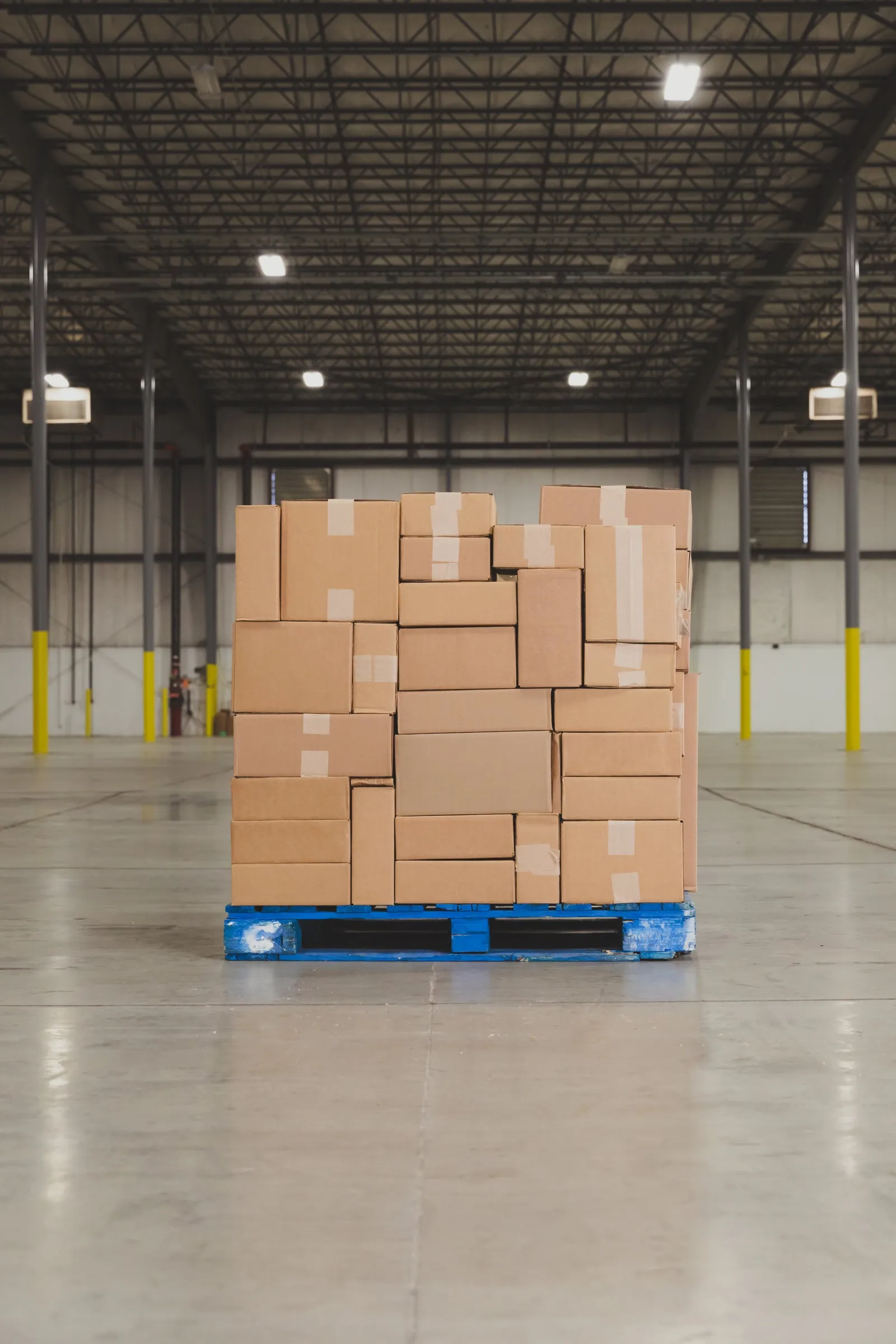
You build the product. We build the business around it.
Here's the actual division of labour — not a services list, a responsibility list.
with you
- Your product
- Manufacturing
- Buying inventory
- Dispatching orders
Your store
- Your Shopify store — the whole admin, day to day
- Branding and how the product is positioned
- Pricing strategy
- Conversion improvements on the store
Advertising
- Meta and Google Ads, run inside your own accounts
- Ad creative — graphics, video cuts, banners
Marketplaces
- Amazon, Flipkart and Meesho — listings and accounts
Orders and logistics
- RTO reduction and courier disputes
- Which courier to use, and where
- Inventory planning
Growth
- Product launches
- Scaling decisions
- Email and WhatsApp follow-up
- Analytics and reporting
- Overall growth strategy
Four things stay with you. Everything between "the product exists" and "the customer has it" is ours.
We run your ads inside your own ad accounts, not ours. You keep the data, the history and the access. We never mark up your ad spend — you pay Meta and Google directly, exactly what they charge.
Taking this much responsibility only works if we think about your business as carefully as you do. So here's how we think.
How we think
Most agencies tell you what they did. We'll tell you why we decided it.
Running an ecommerce business is a series of decisions, and most of them aren't obvious. Here's how we approach a few of the ones that come up most often.
When we stop scaling a campaign that's still profitable
A campaign showing good returns isn't automatically one to put more money behind. If the additional spend is bringing in customers who buy once and never return, or who order COD and refuse delivery at a higher rate, then scaling makes the top-line number look better and the bank balance worse. We look at what happens after the sale before we decide to buy more of them.
How we choose a courier
Not by headline rate. A courier that's ₹15 cheaper per shipment but delivers successfully 8% less often in your main states is more expensive, not less — you just pay for it in RTOs instead of on the invoice. We look at real delivery performance by region for the specific pin codes your orders actually go to.
When we tell a brand not to spend more
Sometimes the honest answer is that the product isn't ready, the price is wrong, or the store converts too poorly for more traffic to help. Spending more at that point is the most expensive way to find out. Because we're paid on what you keep, telling you to pause costs us money too — which is exactly why you can trust us when we say it.
How we decide when to scale a campaign →How we choose a courier partner →
That last one is only credible because of how we're paid. Here's what that looks like in practice.
Proof
Every number below is from an account we're running right now.
Not stale case studies from three years ago. Live accounts, current numbers.
5.1x
Return on ad spend · Ladakh Berry · Google Ads · lifetime
For every ₹1 spent on ads,₹5.10 came back in tracked sales.
- Revenue
- ₹6,70,173
- Ad spend
- ₹1,31,198
- Platform
- Google Ads
- ₹13,20,583
- Total tracked revenue
- ₹4,48,097
- Ad spend under management
- 8
- Brands
Across 8 Partner Brands · revenue lifetime + last 30 days · ad spend lifetime + last 60 days · as of 2026-08-02
Partner Brands we run



Why our fee works the way it does
We charge 3.5% of net sales — the money left after refunds, returns and RTOs come out. The money that actually stayed in your account. Not orders placed.
How that differs from a retainerShow less
A retainer bills you the same whether you made money last month or lost it. A percentage of ad spend bills you more the more it spends, whether or not that spend worked.
This is the range the model is built for.
1 Retainer figures from published Indian agency rate ranges — ₹75,000–₹6,00,000 per month, anchored to the comparison table's published rows. Sources are footnoted on the pricing page. Our fee is 3.5% of net sales plus GST — net sales being what's left after refunds, returns and RTOs come out.
When a shipment gets refused, we absorb that alongside you. No setup fee, no onboarding fee, no creative fee, no reporting fee.
| Net sales/ month | Orcas Prime3.5% + GST | Typicalretainer |
|---|---|---|
| ₹5,00,000 | ₹17,500 | ₹75,000+ |
| ₹10,00,000 | ₹35,000 | ₹1,50,000+ |
| ₹25,00,000 | ₹87,500 | ₹3,00,000+ |
Who this works for
This works best for brands doing roughly ₹3–50 lakh a month in net sales, on Shopify, on marketplaces, or both.
Below that, a percentage of your sales won't fund the work properly — and we'll say so in the first conversation rather than take the account. Above it, the model still works, but a fixed retainer may suit you better and we'll tell you that too.
If you're not selling online yet, there's a way to start that costs you nothing.
Learn
Everything we know, written down.
No email required, no gated PDFs. If it would help you run your business better, it should just be readable.
RTO and returns
What RTO actually costs an Indian seller
Read →RTO and returns
How to reduce COD returns in India
Read →Getting started
Shopify or marketplace first?
Read →Pricing
What ecommerce agencies charge in India
Read →More going up as we write them.
If any of this made sense, the next step is a two-line WhatsApp message.
It's already written — just hit send. We'll look at your store and your numbers and tell you honestly whether the model fits.
No forms, no discovery call booking, no sales sequence. A conversation.
Or email orcasprime@gmail.com+91 90018 33059
What Day 0 to Week 2 actually looks like →
Not selling online yet? Start on Amazon for free.
We'll open your Amazon seller account, list your first products, and run it for three months at no cost to you. Amazon pays us a referral commission for bringing new sellers on — that's how it works, and that's why it's free. There's no lock-in after month three.